Fashion campaign video: build a world, show the product truthfully
What should a fashion campaign video sell, and which formats suit a collection launch? AI production, product accuracy, model permission and a checklist.
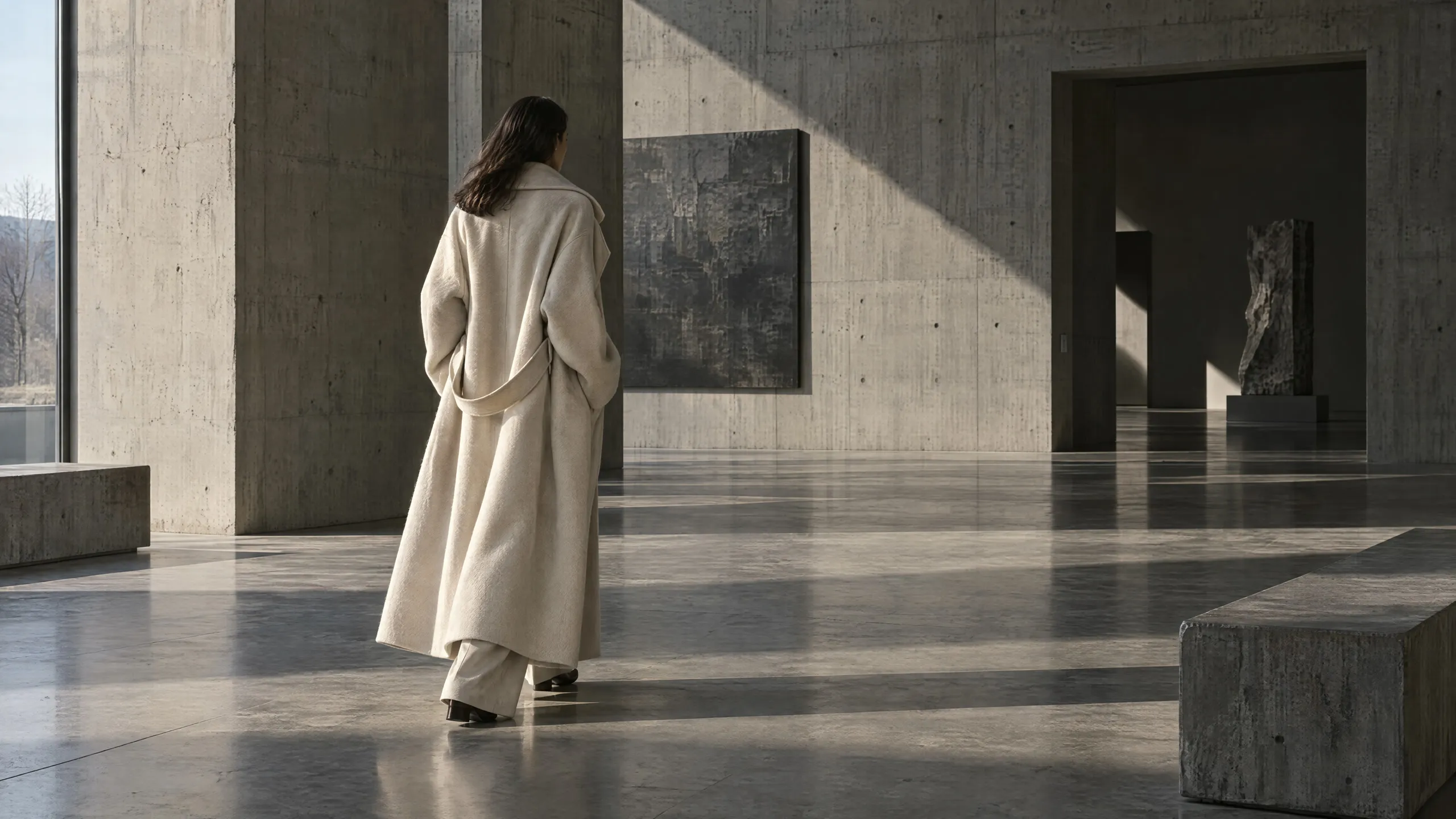
Service AI commercials ·Watch the sample film
What does a fashion campaign video sell?
Nobody buys a coat for its fabric alone; they buy it for the person they’ll be when they wear it. That’s why a good fashion campaign video (or fashion film, or clothing commercial) doesn’t list pieces; it builds a world and an attitude. Viewers see who they could be there and find the rest of the collection in store or online. The same holds for beauty: the product appears inside a feeling.
Take Cinela’s fashion and beauty sample film, “The Window”. It isn’t client work; it’s a study we made to test the method. At midnight in Istanbul’s Nişantaşı, the window mannequins of a boutique come alive and stage their own runway show in the new collection on the empty street. There’s no price and no product list, yet the viewer understands what the collection is saying: night, the city and a little nerve. There’s no real person’s face either; the mannequins carry the scene. Watch the film.
Three questions are enough to test a fashion film idea:
- Which world? A city, an hour, a light: the place where the collection lives.
- Which attitude? Calm, daring or playful? Pick one word.
- Which moment? The one moment when the piece moves and catches the eye.
Collection launches and seasonal drops
In fashion, time is always short. The collection is ready, but a traditional campaign shoot means locations, crew, models and permits, and usually takes 4–8 weeks. That can mean the first weeks of the season go by without a film. With capsule collections and in-season drops, the gap gets wider.
AI production has no set and no film crew. The film is done 5–7 business days after the approved brief, and changes are made frame by frame on the same day rather than with a reshoot. That helps after the launch too: a new short film for mid-season, in the same world and with the same attitude, doesn’t need a new shoot day. The traditional timeline is an industry-wide figure, not a quote.
At Cinela the process runs like this: day 1, a brief of about 20 minutes (a one-sentence idea is enough); day 2, the script and shot list; days 3–4, a frame for every scene; day 5, music, sound, edit and delivery. No step goes ahead without your approval.
Which format for which channel?
One core idea yields several formats. The efficient route is to build the world once and cut it for each channel.
| Format | Shape | Job | At Cinela |
|---|---|---|---|
| Campaign film | 30 s; 16:9, 9:16 and 1:1 cuts | Build the collection’s world and attitude | Commercial, $1,990 |
| Reels and TikTok | 9:16 vertical, 15 s | Stop the scroll; announce the launch or drop | Social Series, $990 / 3 videos |
| Lookbook motion | Short vertical videos, one per look | Show outfits inside an atmosphere | Social Series (3 × 15 s) |
| Branded series | 5 episodes × 60–90 s vertical | Bring followers back all season with one character | Branded Series, $5,900 / season |
| Product page | Real photos and video | Show cut, colour and fabric exactly as they are | Real product shoot |
Prices exclude VAT; package details are on our AI commercials page. For the first-second hook in a vertical cut, see our Reels ad video guide.
The honesty line in fashion and beauty
In fashion and beauty, viewers don’t only watch a story; they look at a product they’re about to buy. So the line is sharper here: AI builds the world, it doesn’t change the product.
| What AI builds | What must match reality |
|---|---|
| Location, city, time of day and weather | The garment’s cut and fit |
| Light, atmosphere and camera movement | The fabric’s colour, texture and drape |
| Staging, choreography and edit rhythm | How the piece sits on the body |
| Music and sound | A beauty product’s real result: shade, coverage, finish |
In practice:
- Real footage where accuracy matters. Use real photos and video on product pages, in posts that show a price, and for close-ups of fabric or colour.
- If the film shows the piece, the piece looks right. Mood lighting shouldn’t shift the colour. At Cinela the frame for every scene comes to you for approval on days 3–4; that’s where it’s checked against the real garment.
- Beauty results aren’t exaggerated. The effect on skin, tone or lashes never promises more than real use delivers.
Regulators take this line seriously. In the UK, the Advertising Standards Authority upheld complaints in 2021 against two tanning brands whose influencer posts used filters that exaggerated the product’s effect. It said filters aren’t a problem in themselves, but are likely to mislead when they exaggerate what the product does. In Turkey, where we’re based, an amendment to the commercial advertising regulation that took effect on 1 August 2026 requires ads featuring AI-made digital characters indistinguishable from humans to say so clearly and visibly.
Faces and models: only with permission
The most sensitive question in a fashion film is the face. Cinela uses faces, voices and brand assets only with their owner’s permission. If you want to work with your own model, you can bring them into the film through photos or video, provided you hold the rights for that use.
The same Turkish amendment is clear here too: ads in which an AI-made digital copy of a real person falsely appears to have personally used or recommended a product are banned.
Labelling is part of the job. Cinela delivers every film clearly labelled as AI-made and never passes off AI content as real; we explain why in our guide on how to tell if a video is AI-generated. Sharing images of an unreleased collection is sensitive, too: your brief and uploads are never used to train models and are deleted at the end of the project.
A checklist before the brief
- What is the collection’s world and attitude? A city, an hour, one word.
- When is the launch? The film should be ready before it.
- Which formats do you need? Campaign film, vertical cuts, lookbook motion.
- Which pieces will appear in the film? Prepare real photos of each: front, back, a fabric close-up, true colour.
- Is there a beauty product? No image should promise more than real use delivers.
- Are faces and rights in order? If you’re using your own model, you need to hold the rights.
- Is the label ready? The film and the caption should say it was made with AI, and the platform’s disclosure setting should be on.
A one-sentence idea is enough; write to us through the quote form.
Sources
- ASA / CAP: The (mis)use of social media beauty filters when advertising cosmetic products (11 February 2021)
- Turkish Ministry of Trade: Changes to the Commercial Advertising and Unfair Commercial Practices Regulation (in Turkish, 1 July 2026)
- Official Gazette of Turkey: Regulation amending the Commercial Advertising and Unfair Commercial Practices Regulation (in Turkish, 1 July 2026, No. 33297), Articles 6 and 11
- Fashion campaign video
- Beauty
- Commercials
- AI video
More articles
All articles →-
What is a brand film? How it differs from an ad, its structure and cost
What is a brand film, and how does it differ from a commercial, corporate video or branded content? How a good one is built, where it's used, and cost.
Read -
How to write a commercial script: format, structure and an example
How to write a commercial script: the two-column format, a 30-second structure, an original example script, voice-over rules, common mistakes and a checklist.
Read