What is a brand film? How it differs from an ad, its structure and cost
What is a brand film, and how does it differ from a commercial, corporate video or branded content? How a good one is built, where it's used, and cost.
Service AI video production ·Watch the sample film
What is a brand film?
A brand film tells the story of the brand itself; it’s sometimes called a manifesto film. It doesn’t show a product feature or a campaign discount, but what the brand believes in and how it sees the world. It doesn’t ask the viewer to buy anything; it asks them to remember the brand and attach a feeling to it.
After a good brand film, the viewer can answer one question: what does this brand exist for? The answer is clear even if the logo, product or price barely appear on screen.
Brand film vs commercial, corporate video and branded content
| What it tells | Format and placement | What it asks of the viewer | |
|---|---|---|---|
| Commercial | A product, service or campaign | Short; TV, digital ads, Reels | Buy, try, click |
| Brand film | The brand’s belief and character | A main film plus short cuts; website, launch, presentations | Remember, trust, connect |
| Corporate video | Who the company is, what it does, its capabilities | 60 s–3 min; presentations, trade fairs, investors | Learn, start a business relationship |
| Branded content | A story the brand produces | An episodic series or short film; the brand’s channel and platforms | Watch, follow |
The lines blur. A hotel film can be both a promo and a brand film; split a brand film into episodes and it becomes branded content. We cover branded content in a separate article and corporate films in our corporate video guide.
What does a good brand film say?
Brand films tend to start with big words: quality, trust, passion. Almost every brand has these words on its website, so on their own they say nothing. A good brand film shows a big word through a small moment. It has five parts:
- A belief. The brand’s stance in one sentence: “A guest should come back every year, not just once.” “Fire doesn’t rush.”
- A person. Someone who carries that belief: a customer, a craftsman, a family.
- A moment. A single scene where the belief becomes visible: a couple returning to the same table, a master by the fire.
- A sound. Music and sound carry the film’s feeling; if there’s a voice-over, one line is enough.
- A signature. The brand in the last frame. If there’s a tagline, it should say the same thing as the belief.
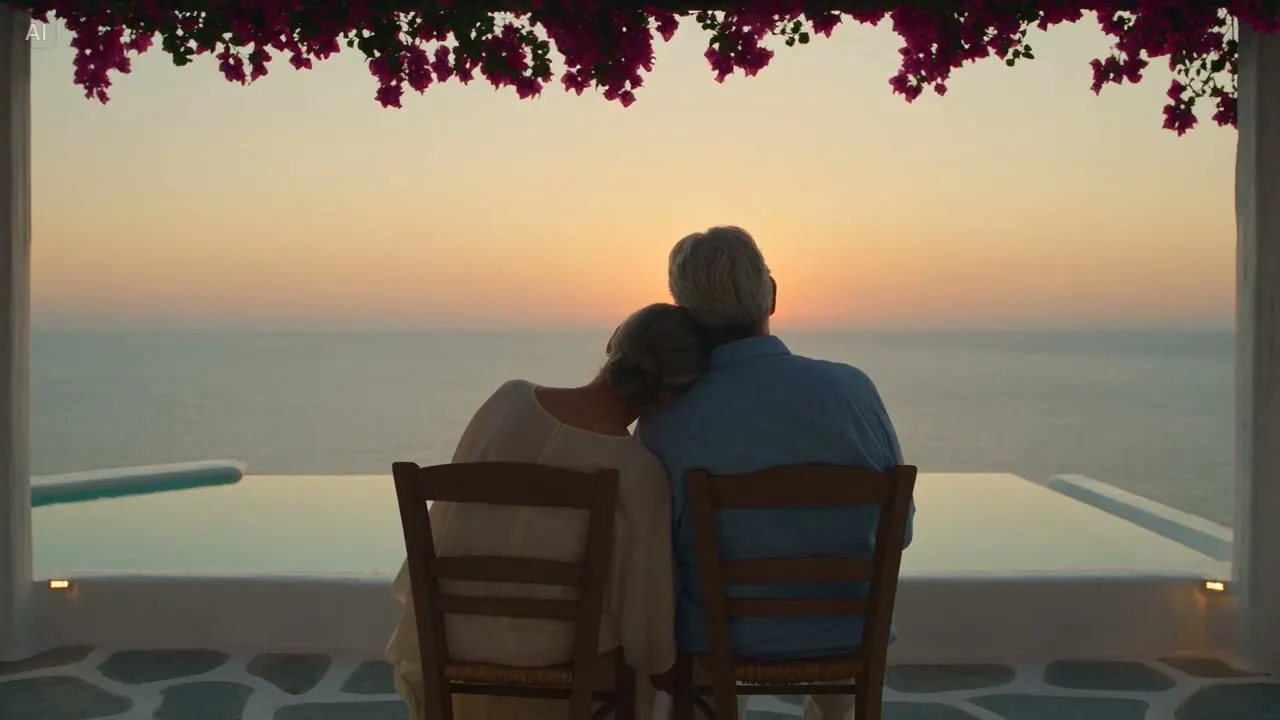
The Same Table, Cinela’s hotel sample film, is built this way. A small hotel on the Aegean; a couple who have come back to the same table for years celebrate their anniversary there once again. There’s no list of rooms, no price and no offer, yet the viewer understands what the hotel believes: a guest should come back every year, not just once. It isn’t client work; it’s our own sample film. Watch The Same Table.
A sample brand film structure: 60 seconds
The outline below was written for this article: a 60-second brand film for a fictional, family-run olive oil brand.
Belief: “We don’t rush.”
| Time | Picture | Sound |
|---|---|---|
| 0–10 s | Dawn in a misty olive grove. An old woman rests her hand on the trunk of a tree. | Wind, birdsong. |
| 10–25 s | Harvest: hands, nets, baskets. Her grandson shakes the branches; she nods and says, “slowly”. | Rustling leaves; music slowly comes in. |
| 25–40 s | A stone mill, a close-up of the flowing oil, bottles being filled in evening light. | The music swells. |
| 40–52 s | A long table; family and neighbours. The woman dips bread in the oil and hands it to her grandson. | Table sounds, laughter. |
| 52–60 s | A wide shot of the grove; the brand name. | Voice-over: “We don’t rush.” |
There’s no product feature, price or offer in the film; the brand is in every shot, yet never steps in front of the story. The same main film also yields a 15-second harvest cut and a 30-second table cut.
Where is a brand film used?
| Where | Format | Job |
|---|---|---|
| Website home page | 16:9; a short muted loop and the full film | Give the brand’s feeling in the first second |
| Launch, event, dealer meeting | Full film, big screen | Bring the room into the same story |
| Investor and partner presentations | Full film | Show a reason before the numbers |
| Recruitment | Full film or a short cut | Let candidates see themselves in the story |
| Social media | 9:16 and 1:1 short cuts | Carry the main film’s world into the feed |
Length depends on where the film will be used. For a website and sales presentations, 60–90 seconds is usually enough; if it also covers the company’s history, facilities and references, it moves towards a corporate video and runs to 2–3 minutes. On social media, people watch the 15–30 second cuts rather than the main film, so those cuts need to make sense on their own.
The most efficient approach is to make the main film once and cut it for each channel. At Cinela, 16:9, 9:16 and 1:1 cuts are included in the package.
How do you make a brand film?
- Write the brand sentence. What the brand believes, in one sentence. If you can’t write it, it’s too early for the film.
- Choose who you’re talking to. Customers, employees or investors; not all at once.
- Find the moment. A single scene that shows the sentence.
- Write the script. Picture and sound side by side, second by second. We show how, with an example, in our commercial script guide.
- Approve the frames. See a frame for every scene and decide how the film will look before production.
- Build the music and sound. In a brand film, music often says more than the voice-over.
- Plan the cuts. Short 15–30 second cuts alongside the main film.
AI brand films: strengths and limits
A brand film needs a world: a particular light, a particular place, particular people. On a traditional shoot, location, cast, crew and weather all have to line up on the same day for that world. With AI there’s no need for a set, a crew or location permits; a sunset on the Aegean or a grill house after midnight can be made in any season. Changing a scene isn’t a reshoot but a regeneration of that scene.
The limit is just as clear. If the film shows real founders, real employees or a real facility as “this is us”, those scenes need real footage. An AI-made face is never presented as a founder or an employee. In Türkiye, since 1 August 2026, ads that feature AI-made characters indistinguishable from humans must say so clearly; Cinela delivers every film labelled as made with AI.
How much does a brand film cost?
| Length | Price (excl. VAT) | Delivery |
|---|---|---|
| 30 s | From $1,990 | 7 business days |
| 60 s | ~$3,010–3,750 | ~8 business days |
| 90 s | ~$4,080–5,080 | ~8 business days |
| 2–3 min | Written quote after the brief | Stated in the quote |
The 60- and 90-second prices are estimates from the price calculator on our site. Script, a frame for every scene, original score and sound design, edit and colour, three formats, two revision rounds and full usage rights are included. Half the fee is paid after the script is approved, the rest on delivery. For how this compares with traditional production, see our commercial production page.
Checklist
- Is the brand sentence a single sentence?
- Does the film talk to one audience?
- Is there one moment that shows the belief?
- Do the logo and product stay out of the story’s way?
- Are scenes showing real people and facilities shot for real?
- Is it stated that the film was made with AI?
- Are the short cuts planned?
If you want to turn your brand’s story into a 60–90 second film, the process and pricing are on our AI video production page; a one-sentence idea is enough to start.
Sources
The rule was checked in November 2026; see the source for the current text.
- Brand film
- Brand story
- Promo film
- AI video
More articles
All articles →-
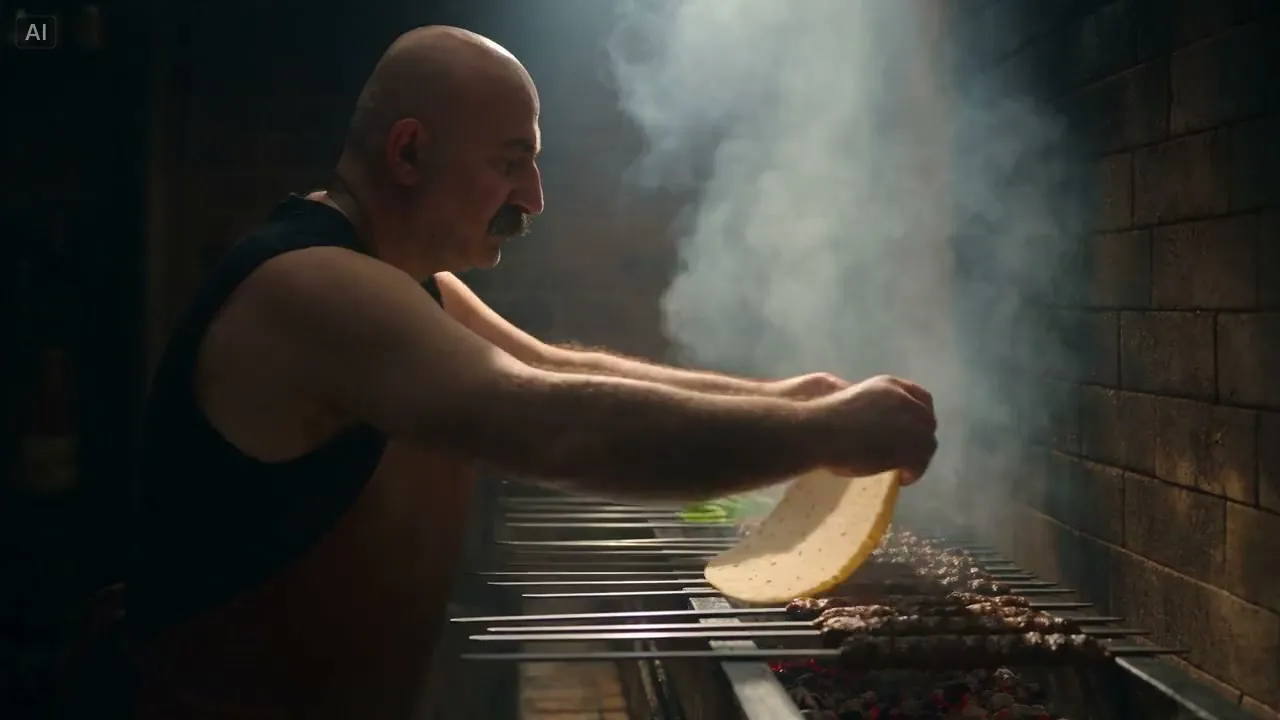
How to write a commercial script: format, structure and an example
How to write a commercial script: the two-column format, a 30-second structure, an original example script, voice-over rules, common mistakes and a checklist.
Read -
What is a PSA? How a public service announcement differs from an ad
What is a PSA, and how does it differ from a commercial? Topics and formats, the rules of a good public service announcement, broadcast rules and AI production.
Read