How to make a product video: a step-by-step guide
How to make a product video: seven steps from goal to call to action, a pre-publish checklist, and when real product footage is a must.

Service AI commercials ·Watch the sample film
How to make a product video
Knowing how to make a product video starts before anything is filmed. A good one doesn’t list every feature; it leaves the viewer with one thing. The seven steps below work in the same order whether you shoot on a phone or work with a studio.
Google’s ABCD framework for YouTube ads describes the same skeleton: attract attention from the start, integrate the brand naturally, connect through emotion and story, and state the call to action clearly.
A product video in seven steps
- Choose the goal. Awareness, sales, or answering a question on the product page? The goal sets the length, where the video runs and what it asks for. A video that wants all three usually achieves none.
- Write one message. One sentence: “This product makes this moment easier for this person.” A benefit, not a feature list. The other features belong on the product page.
- Make the first second a hook. In a feed, viewers don’t wait to decide. Open on the product’s strongest moment: a sound, a movement, a result. The logo and tagline can wait a beat.
- Show the product in context. Not a product on a shelf, but a product in use: in whose hands, at what moment, where? Viewers should be able to see themselves in the scene.
- Build the format for the channel. The same idea doesn’t work in the same frame everywhere; see the table below.
- Add captions and on-screen text. The video should make sense with the sound off. Keep text short, large and in a colour that stands out from the background, so it reads on a small screen.
- End with one call to action. “See the product”, “Browse the menu”, “Book a table”: one video, one next step. If you mention a price or an offer, make sure it is current and correct.
| Channel | Ratio | Best for |
|---|---|---|
| Reels, TikTok, Shorts | 9:16 vertical | Discovery in the feed, launches, short hooks |
| YouTube, website, TV | 16:9 horizontal | Product pages, longer stories, broadcast |
| Feed post | 1:1 square | A balanced look on mobile and desktop |
For more on vertical ads, see our Reels ad video guide.
A checklist before you publish
- Is there one goal, and is it written down?
- Does the message fit in one sentence?
- Is the product, or its result, visible in the first second?
- Is the product shown in a real moment of use?
- Do the colour, size and packaging match the real product exactly?
- Does it make sense with the sound off?
- Is the right ratio ready for each channel? 9:16, 16:9 and 1:1.
- Is there one clear call to action?
- Can every price, offer and claim be backed up?
- Are AI-made scenes labelled?
When is real product footage a must?
A product video has two layers: the product itself and the world around it. They don’t follow the same rules.
| Needs real footage | Can be built with AI |
|---|---|
| The product’s exact look: colour, size, proportions | The world it lives in: place, city, season |
| Texture and material: fabric, surface, consistency | The moment of use: a dinner, a journey, a morning |
| The mechanism and how it works | Light, sound and atmosphere |
| Packaging, labels and ingredient information | Characters and story |
| Results: before and after, performance | The feeling of the category: fire, steam, speed |
The reason isn’t only aesthetic. In the US, the FTC’s core rules are that advertising must be truthful and non-deceptive, and that advertisers must have evidence to back up their claims. In Turkey, where we are based, Consumer Protection Law No. 6502 likewise requires ads to be truthful and honest, bans misleading ads, and makes the advertiser prove its claims. An image that shows the product as something it isn’t (a bigger portion, a colour that doesn’t exist, a feature that doesn’t work) carries the same problem whether it comes from AI or a filter. Turkey’s influencer guide also requires product ads to state when filters or effects were used.
The rule is simple: never misrepresent the product itself. Atmosphere is a feeling; the product shot is a promise.
The two layers can work together: close-ups of the product in real footage, the world and story built with AI. Decide clearly in the brief which scenes need real footage. This is not legal advice; for ads that make claims, talk to your legal counsel.
Example: “Fire” and the atmosphere of a category
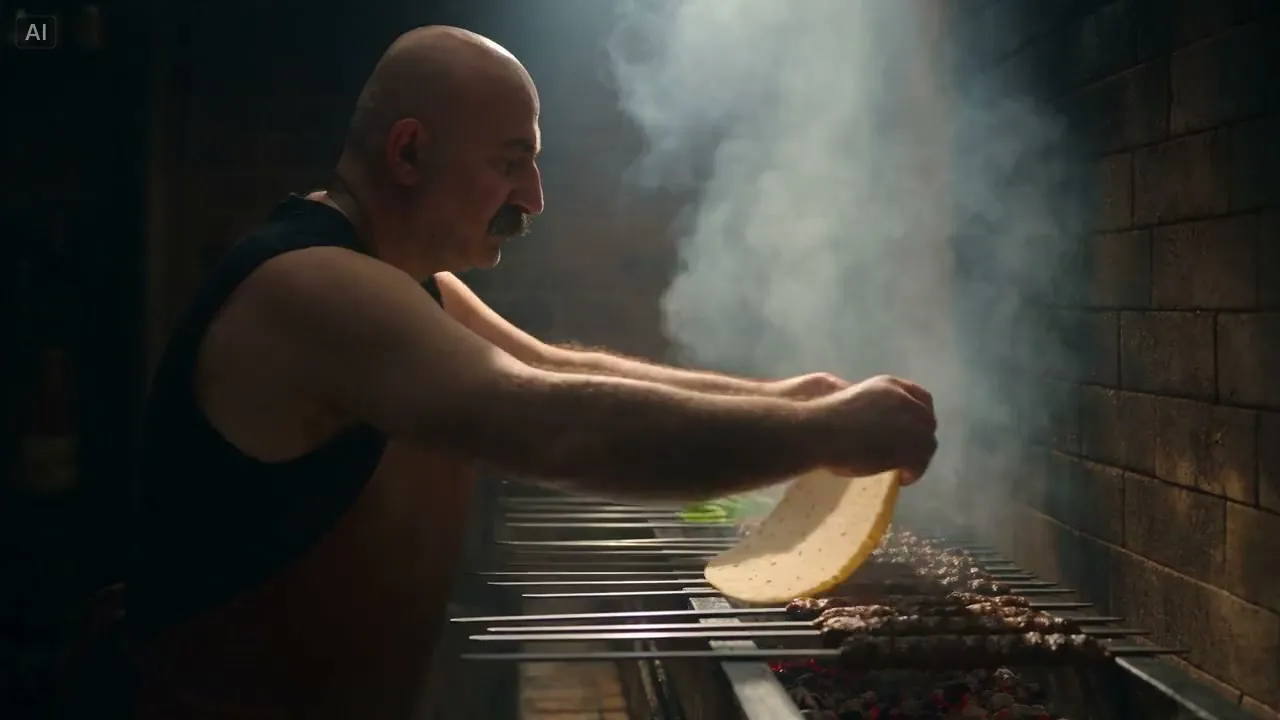
“Fire”, the food and drink sample film on our site, shows the AI side of that line. A Turkish grill house after midnight; the master handles the fire like the hero of an action film. It is not client work; it is one of Cinela’s own studies. It doesn’t sell a particular restaurant’s menu but the appetite of a whole category: embers, sparks, charred peppers on a copper plate.
Every film we deliver, like the cover image of this article, is clearly labelled as made with AI.
If a restaurant used this approach, the split would look like this: the atmosphere film creates the desire, while the real dish, portion and price on the menu are shown in real photography. You can watch the other sample films.
Timeline and budget
Cinela’s starting prices (excl. VAT):
| Package | Price | What’s included | Delivery |
|---|---|---|---|
| Social Series | $990 / pack | 3 vertical videos × 15 s, script and edit, music and sound effects, 1 revision | 5 business days |
| Commercial | $1,990 / film | 30 s film; 16:9, 9:16 and 1:1 cuts; original score and sound design; 2 revisions; full usage rights | 7 business days |
The work moves through brief, script, frames and edit, and no step goes ahead without your approval. Half is paid after the script is approved, the rest on delivery. Package details are on our AI commercials page, and a comparison with market prices is in our commercial cost guide. You can request a quote for your product.
Sources
Checked in October 2026; see the source for the current text.
- Product video
- Commercials
- Checklist
- AI video
More articles
All articles →-

What is a brand film? How it differs from an ad, its structure and cost
What is a brand film, and how does it differ from a commercial, corporate video or branded content? How a good one is built, where it's used, and cost.
Read -
How to write a commercial script: format, structure and an example
How to write a commercial script: the two-column format, a 30-second structure, an original example script, voice-over rules, common mistakes and a checklist.
Read